Many cat owners choose dried cat food—also called freeze-dried or dehydrated cat food—because it’s easy to store, has a long shelf life, and often contains high-quality ingredients. But to make it ready for your cat to eat, you need to rehydrate it with water. The right amount of water is not just about texture; it affects your cat’s hydration, digestion, and safety. If you add too little, the food stays hard and may be tough to eat. Too much, and it can turn soupy and unappealing. Let’s dive into how much water you really need to rehydrate dried cat food and what else you should know for your cat’s health.
Understanding Dried Cat Food
Dried cat food comes in several forms: freeze-dried, air-dried, and dehydrated. All these types remove moisture, making the food lightweight and stable without preservatives. But before serving, you must add water to make it palatable and safe.
Some brands include meat chunks, organs, or even ground bones, so rehydration helps mimic the texture and moisture of fresh food. Cats, by nature, are not big drinkers. That’s why rehydrating dried food is crucial: it helps your cat get enough water, especially if they don’t drink much from their bowl.
How Much Water Should You Add?
Most dried cat foods suggest a 1:1 ratio—that is, equal parts food and water by volume. For example, if you use 1/4 cup of dried food, you should add 1/4 cup of water. However, this is a starting point. The right amount can vary based on:
- Brand and type of food
- Your cat’s preference for texture
- The water content you want to achieve
Here’s a typical guideline for rehydration:
| Dried Food Amount | Water to Add | Final Texture |
|---|---|---|
| 1/8 cup (about 15g) | 2-3 tbsp (30-45ml) | Moist, chunky |
| 1/4 cup (about 30g) | 1/4 cup (60ml) | Soft, stew-like |
| 1/2 cup (about 60g) | 1/2 cup (120ml) | Very soft, almost soupy |
Adjust these amounts if your cat likes their food wetter or drier. Some cats prefer a pâté texture, while others like a bit of chunk.
Credit: www.stellaandchewys.com
Step-by-step: Rehydrating Dried Cat Food
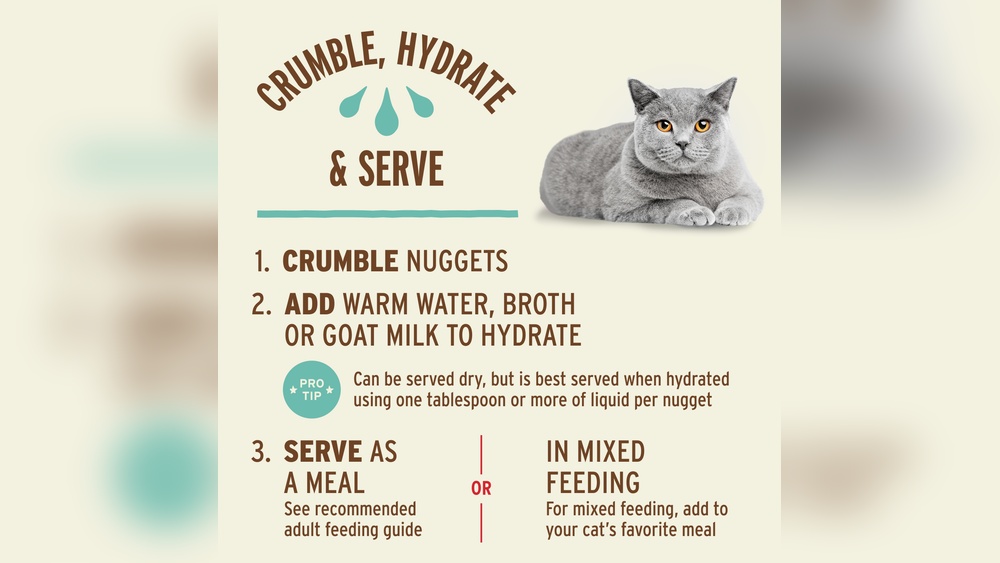
Getting the right result is simple if you follow these steps:
- Measure the dried food according to the serving size for your cat’s weight and age.
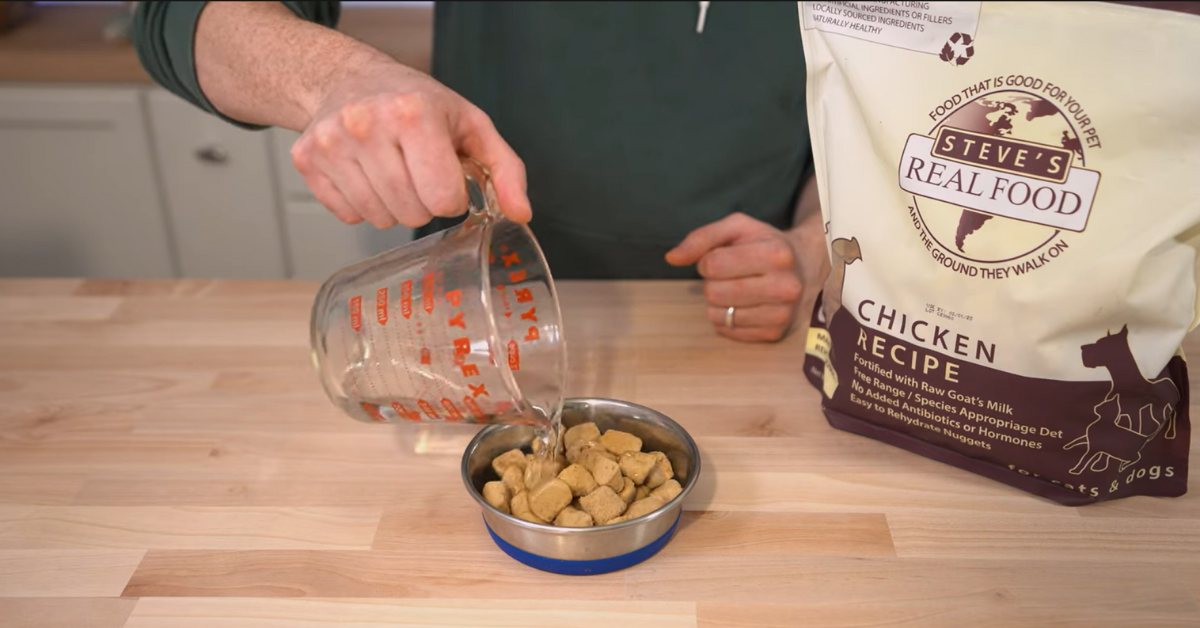
- Add warm water (not hot, to avoid destroying nutrients) using the guidelines above.
- Stir thoroughly to ensure all pieces are wet.
- Wait 3–5 minutes for the food to absorb the water and become soft.
- Check the texture. If it’s too dry, add a bit more water. If it’s too soupy, add a little more dried food or let it sit longer.
Here’s a quick look at how soaking time changes the food:
| Soaking Time | Resulting Texture | Cat Preference |
|---|---|---|
| 1 minute | Still dry, hard bits | Usually rejected |
| 3-5 minutes | Moist, tender | Most cats enjoy |
| 10+ minutes | Very soft, mushy | Cats with dental issues prefer |
Why The Right Water Ratio Matters
Cats are designed to get most of their water from food. Dry kibble has about 10% moisture, while rehydrated food can reach 70% or more—closer to the moisture of prey animals. Proper water-to-food ratio helps:
- Prevent dehydration: Many cats, especially older ones, don’t drink enough water on their own.
- Aid digestion: Well-hydrated food is easier to digest and pass.
- Reduce urinary problems: More water in the diet can lower the risk of urinary stones and crystals.
It’s important to note that too little water can lead to vomiting or constipation, while too much can dilute nutrients if the cat doesn’t eat all the food.
Common Mistakes To Avoid
Many cat owners make these errors when rehydrating dried food:
- Not measuring water: Guesswork leads to inconsistent meals.
- Using cold water: Cats prefer food close to body temperature. Cold food may be ignored.
- Not waiting long enough: Serving before the food softens can be hard on your cat’s teeth and stomach.
- Adding milk or broth: Unless recommended by your vet, plain water is safest. Broths can be high in salt or other additives.
A less obvious mistake is forgetting that the calorie density changes when you add water. Always measure dried food first, then add water, so you don’t accidentally overfeed.
Adjusting For Your Cat’s Preferences
Every cat is unique. Some love food that’s almost soupy; others want just a hint of moisture. If your cat is a picky eater:
- Start with less water. Gradually add more until you find the right balance.
- Serve warm. Room temperature or slightly warm food is more appealing to most cats.
- Mix with wet food. Sometimes, blending rehydrated food with a little canned food can encourage eating.
Watch for your cat’s reaction. If they leave food behind, try tweaking the amount of water or soaking time.
Credit: www.rawpetfood.com
How Rehydrated Food Compares To Wet And Dry Food
You might wonder how rehydrated dried food matches up to traditional wet and dry options. Here’s a quick comparison:
| Food Type | Moisture Content | Palatability | Hydration Benefit |
|---|---|---|---|
| Dry Kibble | 8–12% | Good for grazers | Low |
| Canned Wet Food | 75–82% | Most cats love | High |
| Rehydrated Dried Food | 60–80% | Varies by cat | High |
Rehydrated food sits in the middle for convenience and nutrition, but you control the moisture level.
Practical Tips For Best Results
- Use filtered water for the best taste and safety.
- Clean all bowls thoroughly after each meal to prevent bacteria.
- Prepare only what your cat will eat in one sitting; leftover wet food can spoil fast.
- If you travel, pack a small container to measure water.
For more details on feline hydration and nutrition, the Cornell Feline Health Center offers trusted guidance.
Credit: stevesrealfood.com
Frequently Asked Questions
How Do I Know If I’ve Added Enough Water?
Check the texture after soaking for 3–5 minutes. The food should be moist and soft, with no dry bits. If you see standing water, you’ve added too much; if it’s still hard, add a splash more water and wait another minute.
Can I Use Broth Instead Of Water?
Plain water is best, but you can use low-sodium broth if your vet approves. Avoid broths with onion, garlic, or added salt, as these are harmful to cats.
Is It Safe To Leave Rehydrated Food Out For Hours?
No. Rehydrated cat food can spoil quickly at room temperature. Discard any uneaten portion after 30–60 minutes, especially in warm weather.
What If My Cat Won’t Eat Rehydrated Food?
Try adjusting the water amount or serving temperature. Mixing a small amount of their usual wet food can help transition your cat. Some cats need time to accept new textures.
How Does Rehydrated Food Help With My Cat’s Hydration?
Cats get most of their water from food. Rehydrated dried food provides much more moisture than kibble, helping prevent dehydration and supporting urinary health.
Choosing the right water amount for dried cat food isn’t hard, but it makes a big difference to your cat’s health and happiness. With a little attention and adjustment, you’ll find the perfect balance for your feline friend.